

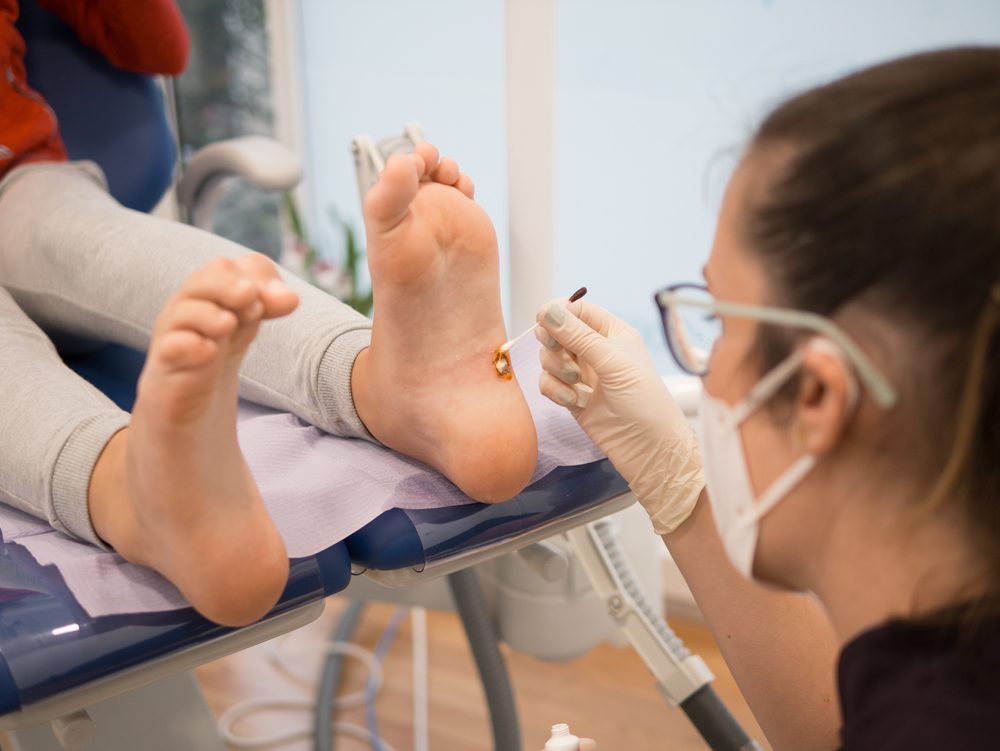
Plantar warts are small growths that typically appear on the heels or other weight-bearing areas of your feet. While they can be harmless, these growths are caused by human papillomavirus (HPV) and can be painful. Here is more information about plantar warts and how they are treated and prevented:
Identifying Plantar Warts
Plantar warts result from an infection with the human papillomavirus, which can enter the body through tiny cuts or weak spots on the bottom of the feet. Because the virus thrives in warm and moist environments, it is commonly contracted in public locker rooms or pool areas. You might notice a small black dot in the center of the growth, and these dots are tiny clotted blood vessels at the center of the growth.
Choosing Wart Treatments
Both at-home remedies and professional treatments can take care of warts on the feet, but when treatment at home does not achieve results, it may be helpful to seek medical help. You can try over-the-counter products at home that contain salicylic acid, which removes the wart in layers. Applying apple cider vinegar twice daily to the wart for several weeks may weaken the wart enough for home removal. There are at-home cryotherapy kits that freeze the wart, but these treatments are not as strong as professional cryotherapy treatments.
Medical professionals offer several effective methods for removing these stubborn growths. Many patients find success with prescription-strength salicylic acid; this treatment is stronger than the versions you can buy at the drug store. If the growth does not respond to topical acid, a podiatrist may suggest cryotherapy to freeze it with liquid nitrogen. These professional-grade treatments may get results when at-home treatments do not.
Adopting Preventive Habits
Keeping your feet clean and dry helps reduce the likelihood of developing a viral infection. Avoid walking barefoot in public spaces, and wear flip-flops in gym showers to protect your skin from the virus. When you share a bathroom with someone who has an active growth, do not share towels or socks with that person. Use these daily habits to further protect your skin:
- Wash your feet daily with soap and water.
- Change your socks whenever they become damp.
- Rotate your shoes so they can dry out completely between uses.
Seeking Professional Help
Home remedies do not always clear the infection, and a persistent growth may signal the need for a professional evaluation. Schedule an appointment with a healthcare provider if the wart starts to bleed or changes its physical appearance. While some warts disappear on their own over time, others cause pain that may interfere with your ability to exercise. If you have diabetes or a condition that affects circulation, see a specialist immediately to address new growths to prevent secondary complications.
Learn More About Plantar Warts
Plantar warts can be treated at home to an extent, but when at-home remedies do not achieve results, you can contact a medical professional to get further treatment. Options may include cryotherapy, laser therapy, salicylic acid treatments, or surgery. To learn more about plantar warts and how to treat them, consult a podiatrist near you.