

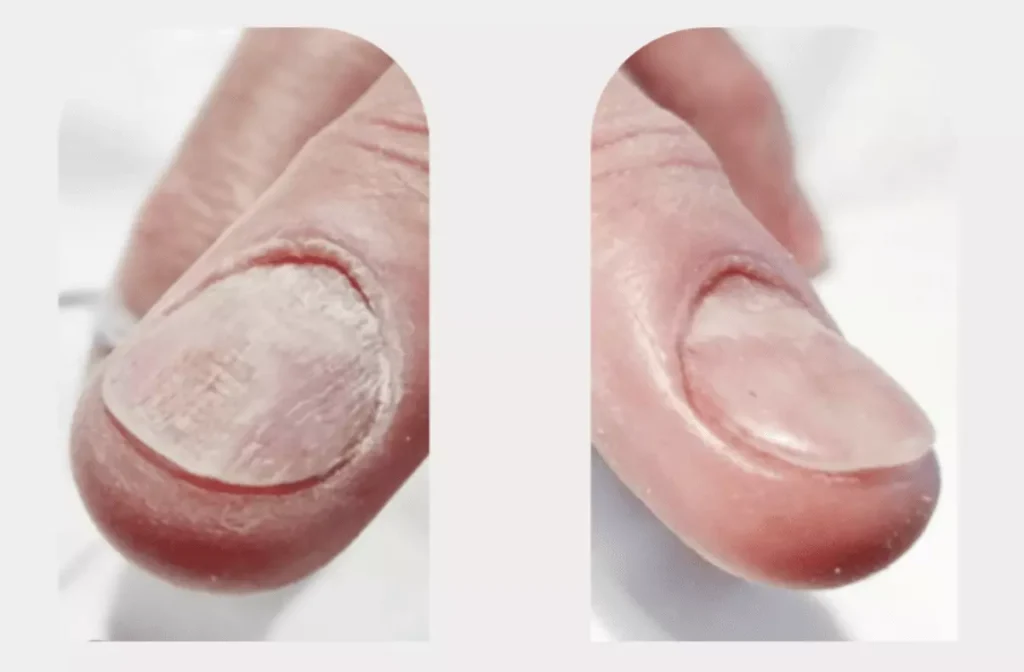
Fungi need moisture to survive. Damp environments feed the infection, and dry settings starve it. Since moisture is everywhere, avoiding it is hard. When you understand the cause, preventing fungal nails is easier, and healing can begin.
Lessen Water Contact
Water changes your nail structure. Nails are porous, so they absorb liquids easily. If you soak your feet, the nails swell and the pores open. Fungi may enter through these openings. The nail dries, but the fungus stays trapped inside. The nail creates a seal, locking in moisture and allowing fungi to thrive. This cycle repeats daily. Your nail expands in water and contracts when dry. When the structure changes often, cracks form and the barrier weakens. This damage invites more infection. Keep nails dry, or the cycle continues. Although water seems harmless, it aids the fungus, and it hinders recovery. Softened nail tissue also becomes a problem. It makes the nail more vulnerable to breaking.
Reduce Daily Exposure
Sweat is a major problem. Socks hold moisture against the skin, and shoes prevent evaporation. When you wear synthetic socks, sweat cannot escape, and humidity rises. Change your socks every day. Since cotton only absorbs some moisture, wicking fabrics are better. Although you may like warm showers, if you don’t dry your feet afterwards, fungus can grow. Pay attention to your toes. Moisture hides between them and can stay for hours. Because toes touch, air cannot circulate, and dampness persists. Use a towel after bathing. You can use a hairdryer, but set it to cool. Rotating your shoes is also a good habit. Give them a full day to air out, and they will stay drier inside.
You can use antifungal powders or sprays, especially if you are prone to fungal nails. These products help keep your feet dry and create an environment less hospitable to fungi. Make sure your socks are made from breathable materials, such as cotton or moisture-wicking fabrics, to reduce sweat buildup. Wash socks regularly and avoid reusing them without laundering. If you notice persistent itching, redness, or scaling on your feet, consult a healthcare professional promptly. Early treatment prevents worsening of the condition and reduces discomfort. Taking these practical steps helps you maintain healthier feet and lowers your risk of infection.
Effective Fungal Nails Intervention
You have several treatment choices. Antifungal creams act on the surface and reduce fungal counts. If the infection is deep, creams may not work, so pills are needed. Oral medication works systemically. It travels through your blood, and it reaches the nail bed. A doctor will monitor you while you take these pills to ensure your safety. While pills are effective, some prefer lasers or surgery. Laser therapy targets the fungus. Light energy penetrates the nail, and it destroys the infection. This method is convenient for many, but several sessions may be needed for the full effect. When the nail is damaged, doctors may remove it, and a new one grows. Surgical removal is an option.
Seek Professional Advice
Managing moisture matters. Dry feet can stay healthy, but damp feet remain at risk. Because treatment takes time, do not hesitate. Book an appointment today. A podiatrist examines your feet and prescribes the right plan for you.