

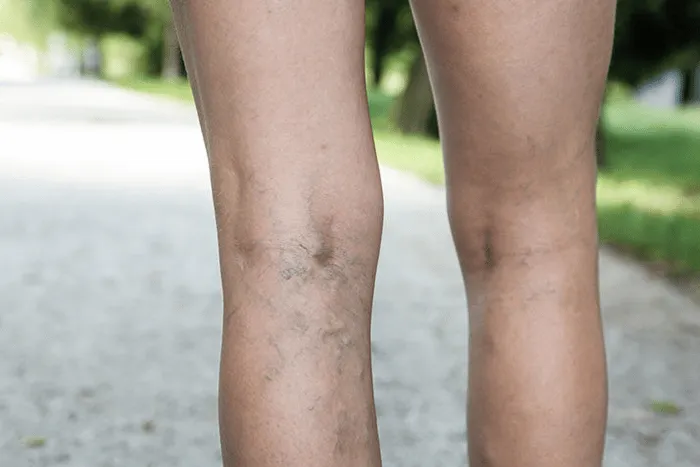
Spider veins appear on the surface of the skin, and they look like blue, purple, or red spider webs. While they are normally harmless, many people seek ways to prevent them from forming, and there are several practical strategies you might explore. These follwoing preventive methods focus on promoting healthy blood flow and managing pressure in the veins:
1. Elevating Feet
Elevating your feet may help reduce pressure that builds up in your leg veins throughout the day; you can prop them up on pillows or a stool. While you are resting, raising your legs above the level of your heart allows gravity to assist with blood flow back toward the heart, and this lessens the strain on the veins in your lower extremities. This simple adjustment can be integrated into your daily routine, especially after long periods of sitting or standing.
2. Using Compression Socks
Compression socks apply gentle pressure to your legs, and this pressure supports your veins. This support helps the valves function better, which improves blood flow from the legs back to the heart. There are different levels of compression available, so you might speak with a professional about what is appropriate for you.
These garments are designed to be tightest at the ankle, with the pressure gradually decreasing up the leg. This design encourages upward blood flow and discourages blood from pooling in the lower legs. For many, wearing compression socks is a straightforward step toward managing leg vein health, particularly for individuals who spend a lot of time on their feet or sitting down.
People in various professions find these socks helpful:
- Nurses
- Teachers
- Retail workers
- Office staff
3. Exercising Regularly
Regular physical activity is beneficial for your circulation. When your muscles contract during exercise, they help push blood through the veins toward your heart, which reduces venous pressure. Walking is a low-impact activity that effectively engages your calf muscles, and many other forms of exercise also support healthy blood flow.
Incorporating movement into your daily life does not require intense workouts. Simple activities such as taking the stairs, going for a brisk walk during your lunch break, or stretching your legs every hour can make a difference. The goal is to avoid long periods of inactivity, as prolonged sitting or standing can cause blood to pool in your leg veins, increasing pressure and potentially contributing to the development of spider veins.
Maintaining an active lifestyle offers broad benefits for your circulatory system. Regular exercise strengthens your heart, improves blood vessel function, and helps manage your weight. Because excess weight adds pressure to your veins, regular activity provides a dual benefit by directly aiding circulation and helping you maintain a healthy body weight.
4. Controlling Weight
Maintaining a healthy weight helps reduce the amount of pressure on your veins. Extra body weight places additional strain on your entire circulatory system, including the small veins in your legs. When you manage your weight, you may lessen this burden, which may help prevent spider veins from forming. A balanced diet and regular physical activity are key components of a weight management plan.
Get Treated for Spider Veins
Preventive measures may reduce the likelihood of developing new spider veins, but they will not eliminate existing ones. If you are bothered by the appearance of spider veins, professional treatments are available to address them. To learn more about your options, schedule a consultation with a specialist who can provide personalized guidance.

