

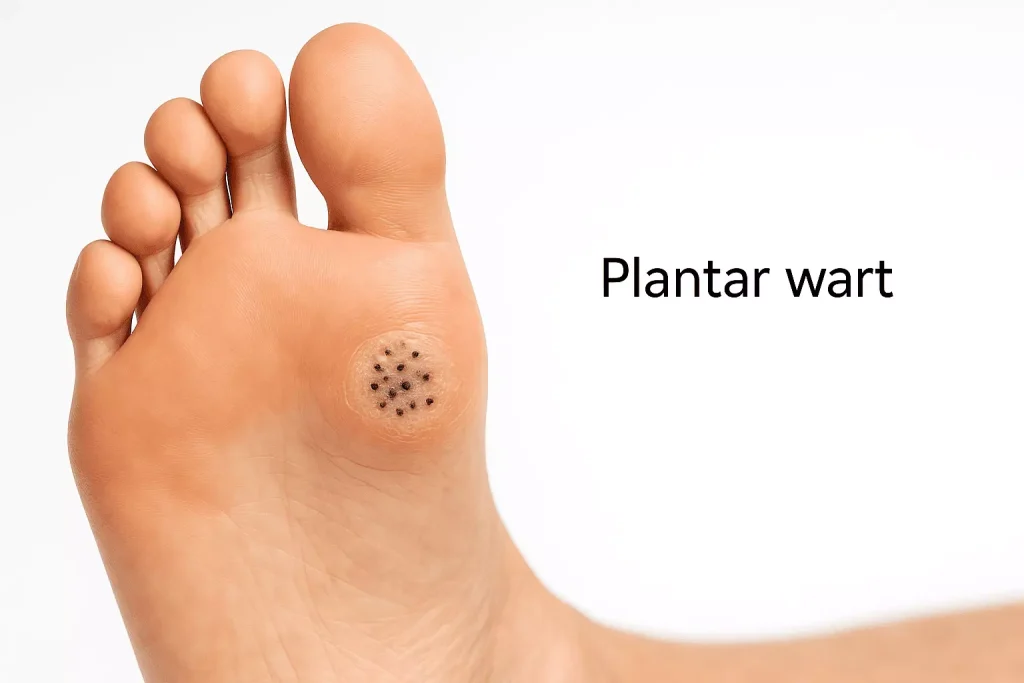
Warts are common skin growths caused by the human papillomavirus (HPV). They are typically harmless but can cause discomfort. Understanding them is the first step toward treatment. These growths can appear anywhere on the body, and some won’t disappear on their own.
Symptoms of Warts
Recognizing the signs of warts supports early action, so look for small, fleshy lesions on your skin. This bump often feels grainy to the touch, and the surrounding skin becomes hard and thick over time. Warts appear as lesions, and most have a rough surface. The color often matches your skin tone or appears slightly gray or brown, making them easy to overlook. A key identifier is the presence of small black dots, which are clotted blood vessels that supply the wart. Some warts can cause tenderness or pain when standing. Pain is more noticeable with prolonged standing or walking, and this interferes with regular activities. Warts on fingers or hands may snag on clothing or break the skin, leading to mild irritation. Paying attention to these symptoms helps you decide when to seek care.
Risks of Warts
Certain groups are more likely to develop warts, including children and teenagers. Individuals with weakened immune systems also face a greater risk, as their bodies do not respond as effectively. This includes people with chronic illnesses or those who take medications that affect immune function. You may be more prone to developing warts if you have a history of them, so it is helpful to be aware of this risk. Not wearing shoes can provide entry points for HPV. Understand these risk factors, and take steps to reduce your exposure.
Treatments for Warts
Several treatment options are available for wart removal. The choice of treatment depends on different factors. Your provider often starts with topical, pain-free options, such as medicated solutions. Use them as directed and protect the surrounding skin from irritation. In-office treatments are also common, including cryotherapy (freezing) or the application of a special acid directly to the wart. Cryotherapy uses liquid nitrogen, and the process sometimes requires several sessions. Acid treatments, such as trichloroacetic acid, are applied by a provider and may cause mild discomfort or a stinging sensation at the site.
Both methods focus on the wart area while protecting healthy skin. If warts return or symptoms do not improve after initial treatment, your provider sometimes recommends a minor surgical procedure to remove the wart. This process involves numbing the area with local anesthesia, and then your provider will excise the wart using a small instrument or blade. The approach is used for warts that do not respond to topical or in-office treatments. Your provider will provide instructions for aftercare, including keeping the area clean and monitoring for healing. Follow all instructions.
Consult a Professional
Addressing warts helps prevent discomfort and spread. Understanding the symptoms, risks, and treatments empowers you to take control of your skin health. For a personalized diagnosis and effective treatment plan, consult a podiatrist. A specialist will guide you to the best solution, and you can ask all of your questions. Make an appointment today to discuss warts.

