

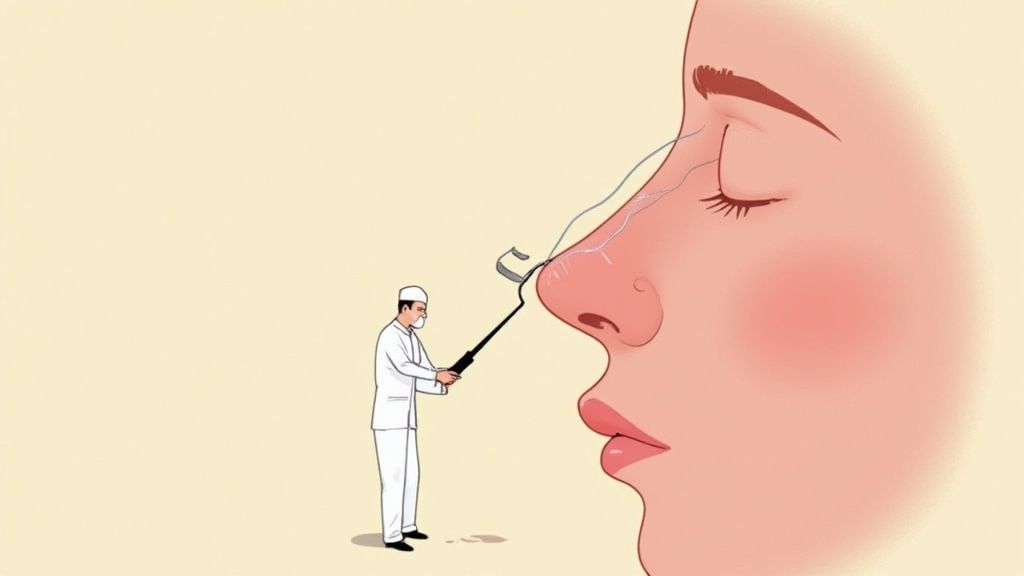
A deviated septum can alter airflow through the nose and sinus drainage, which may contribute to persistent congestion and recurrent sinus symptoms. Chronic irritation and inflammation in the nasal passages can also be associated with conditions such as nasal polyps. These may further block airflow and worsen sinus health. Here’s what to know about the relationship between a deviated septum, sinus function, and nasal polyps:
Disrupting Sinus Drainage
A deviated septum does more than just make it difficult to breathe through one side of the nose. It fundamentally alters the movement of air and mucus through the upper respiratory tract. The following factors illustrate how a deviated septum contributes to sinus dysfunction:
- Physical Obstruction: The deviated cartilage narrows the nasal passage, physically blocking the small drainage openings for the sinuses.
- Mucus Stasis: Mucus accumulates and thickens because the drainage pathways are blocked, which increases sinus pressure and congestion.
- Impaired Airflow: Airflow disruption can dry the nasal membranes or cause them to swell, further narrowing the available drainage space.
These mechanical issues create a breeding ground for chronic sinusitis, and this persistent inflammation is a primary driver of nasal polyps.
Exploring the Inflammation Cycle
When the lining of the nose and sinuses becomes inflamed due to infection, allergies, or blockage, the blood vessels in that lining change. These blood vessels become more permeable, allowing water to accumulate within the tissue cells, and cause the tissue to become waterlogged and swollen. Gravity pulls on these heavy, fluid-filled tissues, and as they hang down, they develop into teardrop-shaped growths called nasal polyps. These growths can appear as a single growth, or they may develop as several growths clustered together like grapes on a stem.
The polyps occupy space within the nasal cavity, increasing the obstruction caused by the deviated septum. This results in even less drainage and more inflammation, leading to larger polyps. It is a cycle where structural issues lead to inflammation, inflammation leads to polyps, and polyps lead to further obstruction.
Recognizing Symptoms
It is common to confuse the symptoms of nasal polyps with those of a common cold or seasonal allergies. Symptoms associated with polyps and a deviated septum typically persist longer and do not resolve with standard cold treatments. You should think about seeing a specialist if you experience the following signs:
- Nasal Obstruction: A persistent feeling of blockage that does not go away, often worse on one side.
- Diminished Sense of Smell: A gradual loss of the ability to smell or taste food.
- Chronic Sinus Infections: Frequent infections that return shortly after treatment ends.
- Dull Headaches: Persistent pressure or aching in the forehead and face.
- Snoring: Loud breathing during sleep caused by the blockage in the airways.
These symptoms suggest the presence of physical obstructions, such as nasal polyps, that require medical intervention.
Fixing Structure and Inflammation
Treating this condition effectively requires addressing nasal polyps and the underlying causes, such as a deviated septum. Doctors may prescribe inhaled nasal steroids to reduce inflammation and shrink the polyps. Oral corticosteroids can also be used to reduce inflammation more rapidly, though their use is brief due to potential side effects.
When polyps are large or the deviated septum causes significant obstruction, surgery is often necessary. A procedure called septoplasty can straighten the septum, opening the nasal passages. It is frequently combined with nasal polyp surgery to remove the growths and clear the sinuses.
Schedule Your Nasal Polyps Evaluation
Nasal polyps and a deviated septum are treatable conditions, but they rarely resolve on their own without professional care. Ignoring the symptoms can lead to chronic discomfort and recurrent infections. If you suspect structural issues or growths are affecting your breathing, contact a certified otolaryngologist near you to schedule your appointment for an evaluation today.